|
|
 |
| |
Homage to Sylvia at four in the morning
In a new edition of one of Sylvia Plath’s most famous collections, her daughter Frieda sheds light on her mother’s happiness and torment, writes Gerald Isaaman
Ariel:The Restored Edition by Sylvia Path Faber and Faber, £16.99 order this book
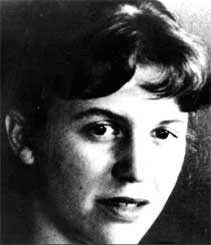
IN the end, all is harvest, insisted Edith Sitwell. And certainly the poet is right about her American contemporary, Sylvia Plath, who has become a feminist icon and much else since she committed suicide some 40 years ago, in Fitzroy Road, Primrose Hill.
She left as her stirring testament a collection of poems called Ariel, named not in honour of Shakespeare’s creation but of a horse she was fond of, and her husband,Ted Hughes, the late poet laureate, ensured its publication.
An amazing acclaim followed for these poems, which have one thing in common.“They were all written at about four in the morning – that still, blue, almost eternal hour before cockrow, before the baby’s cry, before the glassy music of the milkman, settling his bottles,” explains Plath.
“If they have anything else in common, perhaps it is that they were written for the ear, not the eye: they are poems written out loud.”
loud.” That may well be the dawning case, but they have, for the first time, been thankfully resurrected in print, in a facsimile edition that restores the selection and arrangement of the 40 poems as Plath had them when she gassed herself.
Some of her working draughts, as if handwritten yesterday, and notes too are there to touch, to give guidance to her thoughts and emotional perspective.
The poem Death & Co, she advises us, is about “the double or schizophrenic nature of death,” while Fever 103 is “about two kinds of fire – the fires of hell, which merely agonize, and the fires of heaven, which purify”.
You begin to feel some access to her tormented fatal feelings. But, more than that, the new Ariel lightens our eyes – and hearts – thanks to a poignant foreword written by Plath’s daughter Frieda, a poet of talent herself, about her long, lost mother.
It is, in part, brutally honest. “For me, as her daughter, everything associated with her was miraculous, but that was because my father made it appear so, even playing me a record of my mother reading her poetry so I could hear her voice again,” Frieda reveals. “It was many years before I discovered my mother had a ferocious temper and a jealous streak, in contrast to my father’s more temperate and optimistic nature, and that she had on two occasions destroyed my father’s work, once by ripping it up and once by burning it.
“I’d been aghast that my perfect image of her attached to my last memories, was so unbalanced. But my mother, inasmuch as she was an exceptional poet, was also a human being and I found comfort in restoring the balance; it made sense of her for me.”
And Frieda adds: “The outbursts were the exception, not the rule. Life at home was generally quiet, and my parents’ relationship was hardworking and companionable.
“However, as her daughter, I needed to know the truth of my mother’s nature – as I did my father’s – since it was to help me understand my own.” She protests, right- ly, that her mother’s unique poetry “cannot be crammed into the mouths of actors in any filmic reinvention of her story, in the expectation that they can breathe life into her again”.
And she pricks too the media myths that have grown up, in particular that English Heritage should have put up its blue plaque to Plath on the wall of the house in Fitzroy Road, where Plath lived for but eight weeks, wrote 13 poems, nursed her two sick children, decorated and furnished the place before dying.
Instead it went up on the wall of nearby No 3 Chalcot Square, the first London home of Plath and Hughes, where she wrote The Bell Jar, published The Colossus, and gave birth to Frieda.
“This was a place where she had truly lived and where she’d been happy and productive – with my father,” says Frieda. “But there was outrage in the national press in England at this – I was even accosted in the street on the day of the unveiling by a man who insisted the plaque was in the wrong place.”
When the man insisted that Fitzroy Road was where she died, Frieda responded: “We already have a gravestone. We don’t need another.”
And she explains: “I did not want my mother’s death to be commemorated as if it had been won an award.
“I wanted her life to be celebrated, the fact that she had existed, lived to the fullness of her ability, been happy and sad, tormented and ecstatic, and given birth to my brother and me.
“I think my mother was extraordinary in her work, and valiant in her efforts to fight the depression that dogged her throughout her life.
“She used every emotional experience as if it were a scrap of material that could be pieced together to make a wonderful dress.”
Ariel is undoubtedly ready and filled with pride to take flight again.
|
| |
|
|
|
|