|
|
 |
| |
Why is poetry so rare on today’s battlefield?
The pain and dirt of war has often inspired poetry. Tom Foot meets an academic who has spent years unearthing neglected war poets
The War Poets, a five-booklet series general editor Jean Moorcroft. Cecil Woolf publishers, £5-£7.50
CAPTAIN Blackadder ridiculed Private Baldrick’s poem ‘The German Guns’ in Richard Curtis and Ben Elton’s satire set in the trenches during World War I. The sardonic officer said: Hear the words I sing, War’s a horrid thing. So I sing, sing, sing, Ding-a-ling-a-ling.
More memorable lines have been written, but the poem represented a specific point, around the Battle of the Somme, when poets’ perceptions of the Great War began to change from glorification to condemnation.
Unlike the trained soldiers of today’s armed forces, the troops of World War I were conscripted. It meant ordinary individuals – including writers, poets and literary people of every description – were thrown into battle.
Today, many anti-war poets pen their verse not from the trenches but from the relative tranquillity of their north London homes. But during World War I, soldier-poets coupled intensity of feeling with experience. They were the brief chronicles of the time.
The result was to create a powerful era of poetry, now canonised as a genre that ensures every school child will have read Siegfried Sassoon, Wilfred Owen, Isaac Rosenberg or Rupert Brooke as part of their curriculum.
Thousands of biographies, anthologies and critical works have followed and each year, Remembrance Sunday brings their words back into the limelight. So haven’t we heard it all before?
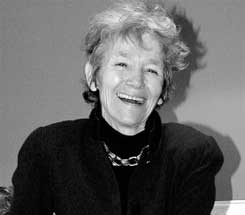
Not a bit of it, according to Dr Jean Moorcroft Wilson – the general editor of a new series on the life and times of the 20thcentury war poets, published by her husband Cecil Woolf – whose latest series reveals some undiscovered gems.
The War Poets series of monographs, launched at the Imperial War Museum, raises the profile of the work of some unfamiliar and neglected poets.
Written in essay form, the monographs throw fresh light on a well-worn subject.The writers under the microscope are World War I poets Richard Aldington and Edmund Blunden, and World War II poets Alun Lewis and Sidney Keyes.
The fifth monograph in the series comes from Richard Percival, the nephew of the soldier-poet Robert Graves. His essay looks at the changing perception of war poets in the World War I.
Dr Wilson’s interest in the period began when her husband set her onto the lesser-known Charles Sorley.
Sorley died at the age of 20 in 1915. In his short life he wrote a number of poems. For Dr Wilson, he was the first poet to engage with the concept, so eloquently put by Baldrick, that “war’s a horrid thing”.
She says: “It was Sorley’s intelligence that interested me. He died in 1915, a year before the Battle of the Somme when the artificial patriotism of war vanished in the minds of many of the better known poets.”
When we think of war poetry,we think specifically of poets like Sassoon, Owen or Brooke – all writers from World War I. It is one of the great mysteries that practically nothing from World War II has stood the test of time. Robert Graves wrote of Alun Lewis: “I have come to the conclusion that Lewis was the only poet of consequence who served and wrote in World War II.”
Dr Wilson says: “The poetry of World War I had a profound effect on everyone. Combat was less mechanised. Wilfred Owen wrote: ‘You are my enemy, I killed, my friend. Perhaps,World War II was less individual.”
Dr Wilson suggests contemporary warfare has moved further down that route – soldiers are less likely to see the whites of anyone’s eyes. She thinks this may be another reason why war poetry, written by soldiers rather than critics living at home, has ceased to be.
She says: “If there is some poetry on the Iraq war I would like to see it. Much of the poetry on Iraq is response – it does not have that intensity which comes from experience.
“It is to do with conscription obviously. Sassoon was a fox-hunting squire before he was conscripted into battle.”
So what distinguishes the canonised poets from the Baldricks of this world? Dr Wilson believes a good poem paints an indelible picture in the mind.
She says: “Poetry distills and concentrates experience. It must be original and use memorable words in an unforgettable order. Like Sorley’s lines ‘millions of the mouthless dead’ – that’s a very chilling image, but you can see it and once you’ve seen it, you won’t forget it. You can’t do that with prose.”
Dr Wilson’s literary journey began in Munich University where she lectured on English literature. But after two years in Germany, her then lover Cecil Woolf, the nephew of Virginia Woolf, drew her home with a marriage proposal.
Dr Wilson – career underway – was unsure what to do, but eventually was persuaded to leave by her lecturer. She says: “I remember the professor of the college saying to me ‘personal happiness is much more important – you should go’.”
But Dr Wilson’s happiness would stimulate her professional life as well. She became interested in Virginia Woolf, who died when Cecil was 14. She wrote a short book about the author’s lesser-known side.
She says: “I called it The Virginia Woolf War Trilogy. It was controversial because many people say she didn’t write about the war but I discovered that her 1922 novel Jacob’s Room was based on Rupert Brooke, a friend of hers. In her novel Mrs Dalloway her character Septimus Smith returns shell-shocked from war. To The Lighthouse has a few crucial passages devoted to the period too.Virginia always wrote retrospectively – never from present experience.”
Dr Wilson, who lectures in English literature part time at Birkbeck University, believes poetry will always make an impact on a certain kind of mind.
She says: “Poetry will always appeal to those with sensibility – that tends to be the females in the class – but anyone with that type of consciousness will get excited. That’s what I love about it.” |
|
|
|