|
|
 |
| |
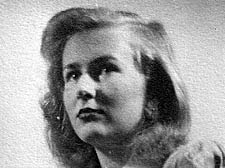
Charlotte Hough |
A Samaritan who was there for a friend in need
WHEN police officers arrived at Charlotte Hough’s door and said they had come to question her about the death of Annetta Harding, she innocently replied that she knew the circumstances of her passing, as she had been there when her friend had died.
It was the start of a horrific set of events caused by her desire to help an elderly neighbour fulfil her final wish.
Charlotte, an illustrator of children’s books, died on New Year’s Eve aged 84 – and became a cause célèbre for the campaign to legalise euthanasia after being prosecuted in the early 1980s for her involvement in Annetta Harding’s death.
Charlotte, who lived in Ivor Street, Camden Town, worked voluntarily for the Samaritans, and it was through this she became friendly with Annetta.
Blind and arthritic, she told Charlotte she intended to take her life when she decided things had become too much, and Charlotte said she would be there for her if she wanted her to be.
When the day came, Annetta took a lethal overdose and slipped gently into a coma while Charlotte sat next to her.
But when Charlotte realised her friend was unconscious but still breathing, she decided to help fulfil her final wishes. Beside the bed, Annetta had placed plastic bags to use to suffocate herself. Charlotte placed them on Annetta’s head and waited until she had stopped breathing.
Her downfall came when she confided to a friend at the Samaritans, who in turn told the director of the Samaritan branch she was working for. They informed the police and Charlotte was arrested.
Born in Hampshire in 1924, Charlotte was a doctor’s daughter and was educated at the Surrey boarding school Frensham Heights.
When the Second World War broke out she set her plans to go to university to one side and instead joined the Women’s Royal Naval Service and married her husband Richard, an RAF officer, in uniform.
After the war she found work as an illustrator for children’s books, and went on to write her own. She lived for a time in Canon Place, Hampstead – her mother was born in Keats House, Keats Grove – and by the
early 1960s had moved to St Johns Wood, before working for the Samaritans in Kent.
Her daughter, novelist Deborah Moggach, recalled how her mother reacted to the charge. She said: “She didn’t really take it in at the time. She was so trusting – she did not think for a moment she would go down. She was a very frank person and when the policemen showed up and asked if she knew Annetta, she replied that she ‘had done – but Annetta is dead now’.”
Although Charlotte avoided a murder charge, she was convicted of attempted murder. She was sent to a prison in Sutton and became a cause célèbre – Lord Longford campaigned on her behalf, and the case was discussed in Parliament.
Her time inside was hard. Bullied by other inmates, she spent her days trying to use her imagination to escape and use her incarceration to write a book.
Ms Moggach recalls: “Despite the hardship, she was always amusing about her time in prison, telling vivid stories about she tried to cope.”
DAN CARRIER |
 |
|
|
|
| |
| |
|
|
|


