|
|
 |
| |
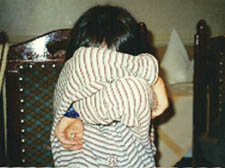
"A typical" autistic pose |
Camden Health | Dr Stella Acquarone | Autistic children - challenge to integrate them |
Psychologist says early treatment is impeded by lack of awareness about condition
DOCTORS in Camden are failing to highlight the early symptoms of autism, according to an internationally renowned psychologist who specialises in the condition.
Dr Stella Acquarone claims her call for GPs to place posters in their surgeries warning of the early signs of autism has not been heeded, and that as a result patients are not aware of the condition.
Dr Acquarone – an autism expert who has been invited to speak at medical conferences throughout the world – works with an entourage of specialists, therapists and neurologists at her private practice in the converted garage of her family home in Frognal, Hampstead.
She claims to have more customers from overseas than in Camden because, she says, there is not the awareness of the condition in England.
A former concert pianist who grew up in a village in Argentina, she said she can empathise with autism herself.
“Practising the piano was the best thing I had in my life but I couldn’t face the stage,” said Dr Acquarone. “I was concerned it was a problem so I studied psychotherapy.”
The mother of two completed her training at the Tavistock Clinic in Belsize Lane and worked in the NHS for 20 years.
“Autistic children surround themselves with things they find comforting like music or maths,” Dr Acquarone said. “They are special. Our challenge is to work around their difficulties and find out what is special about them.The integration of experiences is what allows the child to grow emotionally and cognitively.”
One of her success stories is the son of a couple from California, who agreed to tell their story as long as their son’s anonymity was guaranteed. Up until last year the four-year-old boy’s mother worried she would never be able to bond with her quiet, focused, son.
“He would sit there and play for hours with his beaded maze [similar to an abacus toy] in his own world,” the 37-year-old mother said.
“Most babies babble but he was silent. I’d take him to playgrounds and he’d go and sit on his own in the corner.
“Now he’s four he’s started speaking a lot more. I’m such an advocate of early intervention.”
When she and her husband moved into their flat in Islington two years ago, their primary concern was to visit Dr Acquarone for her month-long, 36-hours-a-week intensive course.
As is characteristic of autism, a condition with no certain cause or cure, his concentration levels were extremely high, he would become fussy or irritable quickly and his engagement with people was notably limited.
On the course his father, a design consultant, and mother, a keen printmaker, learned how to encourage their son to be less rigid through art therapy.
In line with findings by neurologists, who claim that children who feel loved develop quicker and children with autism find it harder to process love, Dr Acquarone coaches parents on ways to connect with their child in terms the child can understand after analysing video footage of their play together.
Two years on, the family visit Dr Acquarone once every two to three months and therapists from her team regularly visit the child in class at his school.
“The less overwhelmed he is the more likely he is to open up,” said his mother. “He wants to play with other kids but he has to get over this rigid sense of controlling what the play is.”
His father added: “I want him to be a happy, confident kid. I have to make sure he’s in the right environment so life is more pleasurable for him.
“When we go to the park he talks to the other children now. Just the other day he met a young girl and they spent two solid hours playing together. He even let her lead how they played. It’s fantastic.”
Trusts need better physio
A WOMAN with a degenerative muscle disease yesterday (Wednesday) handed in a petition at Downing Street calling for better training for physiotherapists.
Stella Fowler, of Chalk Farm Road, who suffers from muscular dystrophy, was joined by 70 other campaigners in Whitehall to call on the government and the NHS to improve treatment of neuromuscular diseases.
A report by clinicians and physiotherapists, called Building on the Foundations: Focus on Physio, claims that almost two out of three NHS trusts say they do not have any physiotherapists with training in neuromuscular conditions. |
 |
|
| |
| Your comments: |
| |
| |
| |
|
|
|