|
|
 |
| |
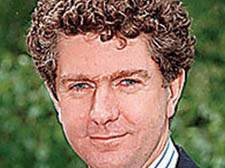
Jonathan Powell
|
Powell to the people and PM Blair’s Cabinet
I STOPPED Frank Dobson MP at the Town Hall on Tuesday after a meeting on the private take-over of GP surgeries in Camden had ended (see page 6) and asked a simple question: “You used to be in the Cabinet, did it ever meet when Tony Blair ran the show?”
Anyone who read a recent long interview with Blair’s closest aide, Jonathan Powell, must have had a similar thought.
Cabinet meetings were hardly mentioned in the piece. It seems government decisions were taken on the hoof by Blair and his advisors Powell and Alastair Campbell.
“Yes, there were Cabinet meetings,” said Dobson with a laugh.
Well, Dobson has a great sense of humour and a way of punctuating his thoughts with laughter – sometimes also with one or two rude words.
I got the impression there weren’t all that many meetings and that he knew who really made the decisions.
Mind, Dobson has got Powell in his sights. To him, he’s an “uber-Blairite”, and that means he’s a political enemy.
Dobson got it right over Iraq – he voted against the war, and foresaw it would end in disaster.
In a debate in the Commons on February 26, 2003, he wasn't “convinced” war was justified, believed Tony Blair hadn’t made a case about weapons of mass destruction, and thought there was no link between Iraq and al-Qaeda.
He was right on all three counts – war was never justified, WMD were never found, and al-Qaeda only found Iraq a feeding ground after the war began.
As for clever-clogs Powell, he was wrong on all counts.
Mind, he’s doing well for himself these days, so he won’t lose any sleep about the year 2003. Meanwhile, the dead pile up in Iraq.
Barbarism of bombing brought home by film shot under attack
I SHOOK my head in sadness as I left the Renoir cinema in Bloomsbury on Monday evening.
It was practically empty. And what a pity! Because I had seen one of the best films of the year, Under the Bombs, about Israel’s attack on Lebanon in 2006
What makes it different from any feature film I’ve seen is that it was made during the war by a crew and actors who improvised while the war raged around them.
If you are shocked when you see bombs falling on a city – witness Baghdad or Beirut – on TV I can assure you, you’ll get a real shock to the system seeing such barbarism in the film.
By comparison, newsreel footage seems to sanitise the visual impression and sound.
But in Under the Bombs, the sound is fearfully deafening – and no wonder because the film crew were busy shooting as the rockets landed.
I gather the Renoir is the only cinema in London bravely showing this marvellous film. Try and see it!
Curtain comes down on golden era for silver screen
WHAT I used to like about the Screen on the Hill in Belsize Park was not so much the stars I saw on film, but the stars I saw in the stalls.
Often, a big name would appear to boost a film and answer questions after the showing.
As we have reported on page 10, Romaine Hart, the woman behind the Screen chain, has sold up to the Everyman – it ends nearly 90 years of her family’s association with cinemas.
Her grandfather, Harry Bloom, ran picture houses and then her father took it on. Romaine set up the Screen on the Green in 1970 to fill a niche for accessible arthouse coupled with intelligent mainstream releases. Later she bought the Screen on the Hill and other cinemas.
But it was her ability to tempt thesps to come and talk about their work which made the Screen brand stand out, and she will take happy memories from encounters with them into her retirement.
“I recall Steven Spielberg turning up,” Romaine recalled. “He was charming, but his security guards most certainly were not!”
Other names that stood out for her were Laurence Olivier, Sir Richard Attenborough, Sir Ian McKellen, Joaquin Phoenix, Jonathan Pryce, Clive Owen and Samantha Morton. “Samantha Morton was incredibly charming, a lovely actor,” said Romaine.
“And as for Michael Palin, believe what you hear: he really is the nicest person in the world.”
Romaine said the reason so many actors and directors were ready to pop in and meet the audience was because they liked what the Screen chain stood for.
“I tried to make these cinemas the types of places they would want to come and see a film in,” she admitted.
But is there someone who she regrets not tempting to find a seat?
“I suppose I shouldn’t admit this, but George Clooney would have been nice,” said Romaine.
“Or the actor Larry Parkes. I was in love with Larry Parkes when I was a teen. I don’t suppose anyone remembers him now.”
For the record, Parkes was the actor who found fame for his portrayal of Al Jolson in a 1946 bio-pic of his life.
As for me, apart from seeing the films at the Screen, I liked the coffee bar and the range of goodies.
 |
 |
|
|
|
|
|
|